
Introduction
In the world of product development and manufacturing, cost efficiency is paramount. For engineers and buyers sourcing CNC machined parts, the quoted price can sometimes be a hurdle. However, the initial part cost is only one piece of the puzzle. At Lenchor, we believe in partnership, which means helping you optimize your designs for manufacturability to achieve the best possible value—balancing cost, lead time, and performance. This guide outlines five actionable strategies you can implement to significantly reduce your CNC machining costs.
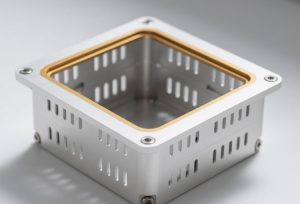
1. Embrace Design for Manufacturability (DFM) Early
The most significant cost savings happen on the drawing board, not the shop floor. DFM is the practice of designing components with their manufacturing process in mind. By collaborating with your manufacturer early, you can avoid designs that are unnecessarily complex or expensive to produce.
- Avoid Deep Pockets with Small Tools: Creating a deep cavity with a small diameter end mill requires many passes, increasing machining time and tool wear. If possible, design with larger internal corner radii.
- Minimize Thin Walls: Extremely thin walls are fragile, require slower machining speeds to prevent vibration and distortion, and are prone to breaking during production. Maintaining a minimum wall thickness (e.g., 1mm for metals) ensures stability and speed.
- Standardize Hole Sizes: Using a variety of unique, non-standard hole sizes necessitates multiple tool changes. Designing holes to standard drill bit sizes can drastically reduce machining time.
- Our Role: At Lenchor, our engineering team provides free DFM analysis with every quote. We’ll highlight areas where subtle changes can lead to substantial cost savings without compromising the integrity of your part.
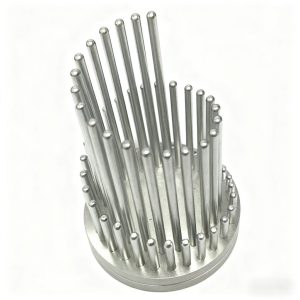
2. Select the Right Material for the Job (and Your Budget)
Material choice directly impacts the raw material cost and machining time.
- Aluminum: Generally the most cost-effective metal for CNC machining. It’s lightweight, has excellent machinability (leading to faster cycle times), and is widely available. Alloy 6061 is a great all-purpose choice.
- Stainless Steel: Offers superior strength and corrosion resistance but is harder on cutting tools and takes longer to machine, resulting in a higher cost. Only specify stainless (like 304 or 316) if your application requires its specific properties.
- Plastics: Materials like POM (Acetal) and Nylon are often less expensive per kilogram than metals and machine very quickly. However, consider their mechanical and thermal properties carefully.
- Expert Tip: Discuss the functional requirements of your part with us. We can often suggest a more economical alternative that meets all your criteria.
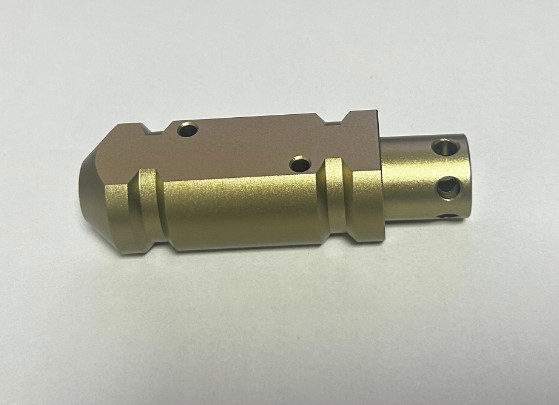
3. Specify Tolerances Wisely
Tolerances define the allowable variation in a part’s dimensions. While critical for fit and function, overly tight tolerances are one of the biggest cost drivers.
- The Cost of Precision: Achieving a tolerance of ±0.025 mm requires significantly more time, specialized equipment, and meticulous inspection compared to a standard ±0.125 mm tolerance. Every decimal place tighter can exponentially increase the cost.
- Apply Critical Tolerances Selectively: Only apply tight tolerances to features where they are absolutely essential for the part’s function. Leave non-critical features with standard, looser tolerances. Our quality control system, which includes CMMs and optical comparators, is built to handle high-precision work, but we advise using it only where it counts to save you money.
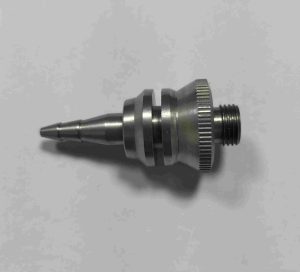
4. Optimize Your Part’s Geometry
The complexity of your part’s geometry directly influences the programming and machining effort required.
- Simplify When Possible: Can a complex, single-part assembly be broken down into two simpler, cheaper-to-machine parts that are fastened together?
- Consider 3D Printing for Intricate Prototypes: For highly complex, low-volume prototype parts that don’t require metal strength, consider SLA or SLS 3D printing. We can advise on the best manufacturing technology for your stage of development.
- Multi-Axis Machining Efficiency: For complex parts that must be monolithic, our 3+2 and 4.5-axis CNC machining capabilities allow us to complete parts in fewer setups, which can be more efficient than using multiple 3-axis operations.
5. Plan Your Order Quantity and Lead Time
Understanding batch pricing and the impact of lead time can lead to better budgeting.
- Economies of Scale: While there is no strict MOQ at Lenchor, the unit price for a part is always higher for a quantity of 10 than for 1,000. This is because the fixed costs of programming and setup are amortized over more units.
- Standard Lead Times vs. Rush Fees: Our standard lead time for prototyping is a rapid 3-7 days. If you require an even faster turnaround, it can often be accommodated but may incur a premium due to production rescheduling. Planning ahead is the most effective way to avoid these costs.
Conclusion: Partner with a Factory That Helps You Optimize
Reducing CNC machining costs is not about finding the cheapest supplier; it’s about finding the smartest partner. A supplier like Lenchor, which acts as your source factory, provides transparent pricing and expert engineering guidance to ensure you’re not paying for unnecessary complexity.
Ready to See the Difference?
Don’t just get a quote—get a manufacturing consultation. Upload your CAD file today for a free, no-obligation quote and a comprehensive DFM analysis. Let our 15+ years of engineering experience work for you to deliver high-quality parts at the most competitive price.