
You have a groundbreaking idea for a medical device—one that could change patient lives and redefine care standards. But now, you’re stuck at a critical hurdle: how do you transform that vision into a high-precision, functional prototype? While established manufacturers focus on volume production and ISO 13485 certification, your immediate need is different. You need a partner who understands the iterative, fast-paced nature of medical device prototype development.
If you’re searching for solutions like “rapid prototyping for medical equipment“ or “CNC machining for surgical instrument prototypes,” you’re already on the right track. This guide is designed to help innovators, engineers, and startups navigate the prototyping phase—emphasizing technical expertise, material science, and precision as the foundation for success, long before certification enters the picture.
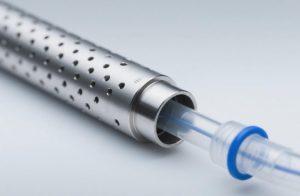
Why Medical Prototyping Demands More Than Standard Machining
Medical devices carry lives in their balance. This reality influences every prototyping decision, from material selection to surface finishing.
- Biocompatible Materials Are Non-Negotiable
It’s not just about strength or durability—it’s about how materials behave in biological environments. Implantable components, for example, often require medical-grade PEEK and titanium prototypes due to their biocompatibility, imaging compatibility, and resistance to bodily fluids. Machining these materials isn’t straightforward; it requires specific tooling, cooling strategies, and deep expertise to prevent stress, warping, or material degradation. - Tolerances Measured in Microns
In surgical instrument prototype CNC machining, a variance of a few microns can determine whether a mechanism operates smoothly or fails. Components must fit together perfectly, move as intended, and withstand repeated sterilization. This precision ensures that the device not only works in the lab but performs reliably in real-world scenarios. - Surface Finish Impacts Function and Cleanability
A perfectly machined part isn’t always a finished part. Surfaces that contact tissue or need frequent sterilization require specific roughness averages (Ra) to prevent bacterial adhesion and facilitate cleaning. For prototype development of implantable devices, surface treatments like passivation or specialized coatings may also be part of the prototyping conversation.
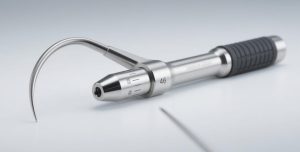
Choosing a Prototyping Partner: Key Criteria Beyond Certification
At the prototyping stage, the right partner isn’t always the one with a framed ISO 13485 certificate. It’s the team that offers flexibility, technical depth, and collaborative problem-solving.
- Material Mastery
Can your partner explain the differences between machining PEEK versus Ultem? Do they understand how to achieve optimal surface integrity on titanium alloys? This knowledge is critical for small-batch precision part manufacturing for R&D, where material performance is being validated. - Adaptability to Design Changes
Prototyping is iterative. A design may go through multiple revisions based on bench testing or early feedback. Your manufacturing partner must be agile enough to incorporate engineering change orders (ECOs) quickly, without compromising on precision or turnaround time. - In-House Quality Control
While formal certification isn’t the goal, rigorous quality control is. In-process inspections, final part validation using CMMs, and detailed documentation ensure that every prototype you receive is a reliable basis for evaluation and further development.
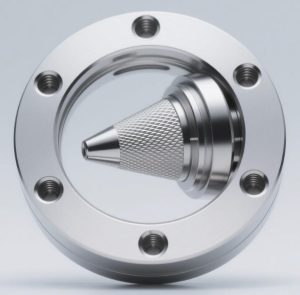
How We Help Bridge the Gap Between Idea and Reality
At our core, we specialize in supporting medical innovators through the uncertain, creative phase of development. We function as an extension of your R&D team, providing the manufacturing expertise that allows you to focus on design and testing.
Here’s how we apply this approach in practice:
- Speed Without Compromise
We understand that time is critical in medical innovation. Our processes are optimized for rapid turnaround of medical device prototypes, helping you test ideas faster and accelerate your development timeline. - Expertise in Complex Geometries
Whether you’re exploring miniature components for drug delivery systems or complex housings for diagnostic equipment, our capabilities include multi-axis machining and meticulous attention to detail, ensuring even the most intricate designs are faithfully reproduced. - From One-Off to Pilot Runs
As your project progresses, we scale with you. Whether you need a single prototype for design verification or a small batch of precision parts for clinical trials, we ensure consistency and quality across all units.
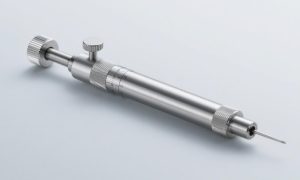
Ready to Take the Next Step?
Bringing a medical device to life is a journey that starts with a single, precisely built prototype. The right manufacturing partner at this stage can make all the difference—helping you avoid costly design flaws, validating material choices, and building a foundation for future regulatory success.
If you’re developing a new medical device and need a technical partner who understands the nuances of precision medical prototype manufacturing, we invite you to connect with us. Share your design, and let’s discuss how to bring it to life with accuracy, speed, and technical excellence.
Contact us today for a free design-for-manufacturability review. Let’s build the future of healthcare, one prototype at a time.