
CNC machining deep narrow features AISI321 stainless steel;challenges of deep thin cavity SS321 CNC milling;austenitic stainless steel deep hole precision machining;supplier for hard‑to‑machine stainless steel deep thin wall parts;AISI321 part deformation control CNC solution;high‑temp stainless steel deep slot precision milling;AISI321 custom prototype small‑batch manufacturing;tips for titanium‑stabilized stainless steel CNC machining;how to reduce vibration & distortion on deep‑feature stainless steel;tooling & coolant strategy for machining AISI321
Within precision CNC machining industry, AISI 321 titanium‑stabilized stainless steel is widely regarded as a difficult‑to‑machine alloy. The challenge multiplies drastically when parts require extremely deep and narrow features: deep narrow slots, elongated small‑diameter holes, thin confined walls. Many machine shops will decline such drawings directly. Common failures include tool chatter, side‑wall deflection, dimensional shift and frequent tool breakage, resulting in unacceptable low yield for serial production. Our latest first‑article product falls exactly into this challenging category. After multiple rounds of process tuning, we have achieved stable qualified deliveries. This article shares real‑world engineering insights for design engineers and procurement specialists evaluating custom metal components.
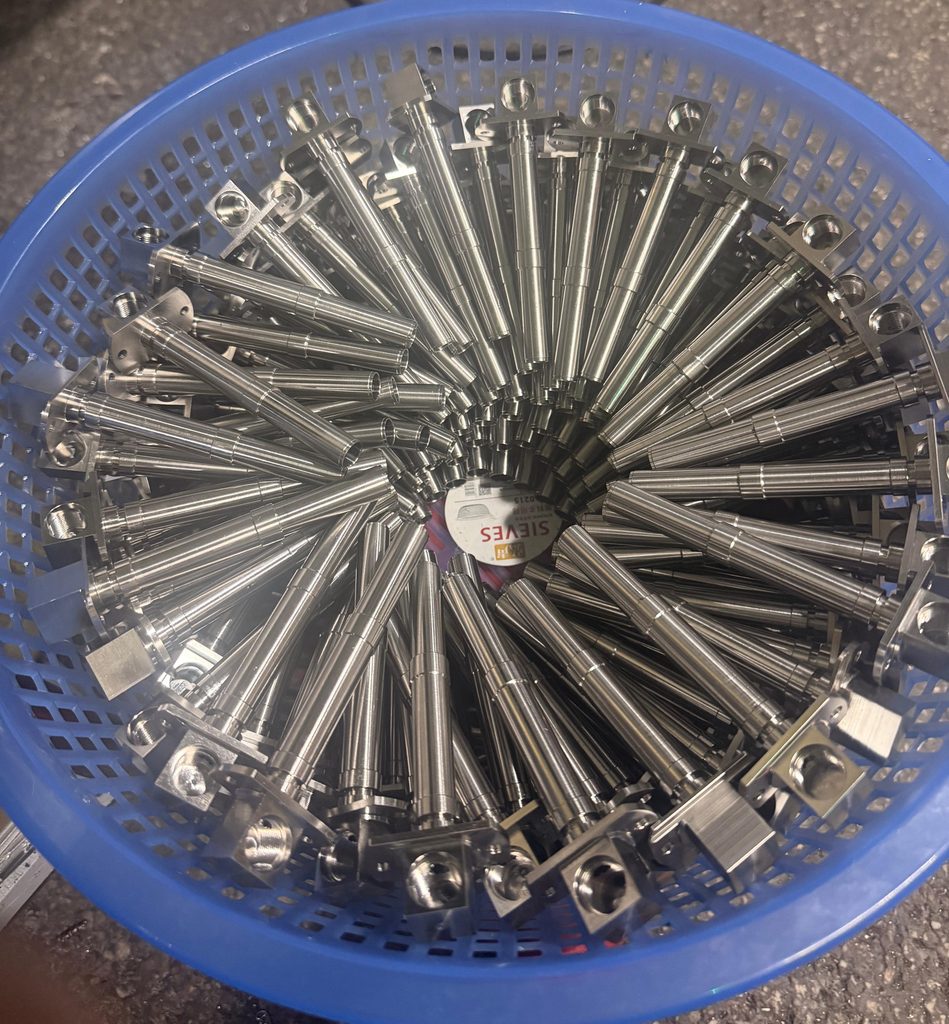
AISI321 is a titanium‑stabilized austenitic stainless grade. Compared with AISI304, titanium addition delivers superior resistance to inter‑granular corrosion and high‑temperature oxidation. It is widely used for high‑temperature assemblies, fluid manifolds, aerospace hardware and heat‑treatment tooling applications. However, these material benefits bring significant machining drawbacks. High ductility causes severe work‑hardening during cutting. Low thermal conductivity traps cutting heat near cutting edges instead of dissipating through chips. Hard titanium‑rich inclusions continuously abrade cutting‑tool edges and accelerate wear. While standard 304 can be handled by most workshops, deep‑narrow geometries expose every weakness of AISI321.
Many customers focus only on drawing tolerances without realizing hidden process risks. Deep‑thin features force high length‑to‑diameter tool ratios, which greatly reduce tool rigidity. Under heavy cutting forces generated by AISI321, slender tools tend to vibrate. Chatter creates surface ripples, poor Ra values and inconsistent dimensions. Thermal expansion from trapped cutting heat adds further dimensional drift. Once clamps are released after machining, residual internal stress is released and parts distort out‑of‑spec, only detected during final inspection. A typical industry pain point: the first prototype may pass inspection, but part two and part three fail continuously. Small‑batch stability becomes impossible. Quite a few clients submit drawings to multiple vendors only to receive feedback: modify geometry, increase wall thickness, enlarge radii or reduce depth, otherwise the part cannot be manufactured.
Many buyers assume upgrading to high‑end CNC machines alone will resolve all issues. From real‑shop experience, advanced equipment forms only the foundation. Stable output for deep‑feature AISI321 depends on a complete system: custom fixturing, tool selection, optimized tool‑paths, stress‑relief cycles, coolant strategy and carefully balanced cutting parameters. Simply raising spindle speed worsens work‑hardening. Too‑low feed rate makes tools rub rather than shear material, generating hardened surface layers that make subsequent cuts even harder. Slender long‑reach tools cannot take full depth in one pass; aggressive plunging risks tool fracture and workpiece scrap.
For this AISI321 component with deep‑narrow features, we built a complete customized process workflow. First, we redesigned workholding fixtures to avoid local clamping‑induced squeezing distortion. Clamping points were redistributed to secure rigidity while minimizing built‑in fixture stress. Second, we selected coated solid carbide tools tailored to abrasive titanium inclusions inside AISI321. Optimized edge geometry reduces friction and suppresses built‑up‑edge formation. Third, machining was split into roughing, semi‑finishing and finishing operations. Reasonable stock allowance was reserved after rough cuts. Intermediate stress‑relief dwell cycles prevent rough‑machining residual stress from ruining finishing accuracy. Fourth, adaptive milling tool‑paths were deployed to lower sudden tool impact, suppress chatter for long‑reach cutters. Dwell‑prone tool movements were eliminated to avoid localized thermal hardening. Fifth, abundant high‑pressure flood coolant continuously targets cutting zones. It removes process heat and evacuates long stringy chips, preventing chip re‑scratches inside deep cavities which would scrap finished parts.
Through iterative trial runs we solved chatter marks, dimension drift and excessive tool consumption, and finally reached stable dimensional performance and acceptable surface finish, achieving qualified small‑batch yields for client acceptance. Below we share practical recommendations for designers and procurement teams:
- Evaluate length‑to‑diameter ratio during drawing review for deep slots or deep holes. Higher ratios increase machining cost, extend lead‑time and tighten tolerance risks. Where design allows, optimizing corner radii and relief grooves greatly reduces manufacturing difficulty while lowering your total component cost.
- Do not copy AISI304 cutting parameters directly onto AISI321. Titanium‑bearing abrasive particles accelerate tool wear compared to standard 304. Higher quotation for AISI321 deep‑feature work is reasonable. Compare real‑world similar case references instead of purely chasing the lowest price.
- Qualification should not rely only on one first‑article sample. Request inspection across consecutive small‑batch samples. Major risk for deep‑thin stainless parts comes from post‑release stress‑induced deformation after un‑clamping. One good prototype does not guarantee batch consistency.
- Schedule sufficient process‑debug lead‑time for difficult AISI321 components. Complex deep‑feature stainless‑steel parts rarely succeed on first trial; iterative process tuning is normally required.
Many engineering projects get stuck not from flawed design, but from limited suppliers willing to invest process‑development effort. Most machine shops reject high‑risk drawings to avoid trouble. We take on these demanding projects to help customers realize challenging designs instead of forcing unnecessary design compromises.
If you have drawings with deep slots, elongated holes, confined thin walls in AISI321, AISI304 or other hard‑to‑machine alloys, feel free to send your files for our technical assessment. We provide honest feasibility evaluation, tolerance boundary feedback, lead‑time and cost estimation. We never blindly accept un‑achievable orders, nor arbitrarily dismiss your engineering design.