
When Every Gram Matters: The Weight-Performance Equation in Drone Manufacturing
As drone technology evolves from hobbyist toys to industrial tools and delivery systems, manufacturers face an increasingly critical challenge: how to make structures stronger while making them lighter. At Lenchor Precision, we’ve worked with drone companies on everything from consumer quadcopters to industrial inspection drones, and we’ve learned one universal truth: every gram saved in structural weight translates directly into longer flight time, increased payload capacity, or improved maneuverability.
This article isn’t just about removing material—it’s about intelligent material distribution. It’s about using CNC machining’s precision to create structures that are optimized not just for manufacturing, but for actual flight performance.
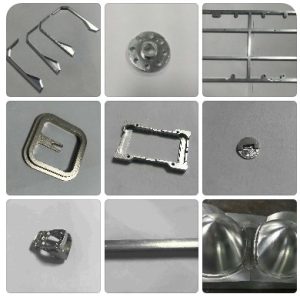
The Core Challenge: Strength vs. Weight vs. Cost
Drone manufacturers constantly balance three competing priorities:
- Structural Integrity: Must withstand flight stresses, wind loads, and occasional impacts
- Weight Reduction: Directly impacts battery life and payload capacity
- Manufacturing Cost: Affects product viability and market competitiveness
Traditional approaches often sacrifice one for the others. But with intelligent CNC machining strategies, you can optimize for all three simultaneously.
Material Selection: The Foundation of Lightweight Design
Aluminum Alloys: The Drone Industry Standard
6061 Aluminum: The Workhorse
- Best for: General structural components, frames, arms
- Strength-to-weight ratio: Good
- Machinability: Excellent
- Cost: Most economical
- Typical applications: Main frames, landing gear, motor mounts
7075 Aluminum: When Strength is Critical
- Best for: High-stress components, connection points
- Strength-to-weight ratio: Excellent (comparable to steel)
- Machinability: Good (requires careful tool selection)
- Cost: 2-3× higher than 6061
- Typical applications: Arm-to-body connections, heavy payload mounts
Real-World Example: One client reduced their industrial drone’s arm weight by 30% by switching from 6061 to 7075 in critical stress areas, allowing thinner wall sections without compromising strength.
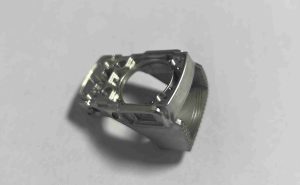
Advanced Materials: When Aluminum Isn’t Enough
Carbon Fiber Composites:
- Strength-to-weight: Exceptional
- Machinability: Specialized techniques required
- Cost: High
- Best application: Flat panels, shells, non-structural covers
Titanium: For Ultimate Performance
- Strength-to-weight: Outstanding
- Machinability: Challenging (requires expertise)
- Cost: Very high
- Best application: Aerospace-grade drones, military applications
Our Hybrid Approach: We often combine materials strategically—using aluminum for main structures and carbon fiber for covers or non-critical components.
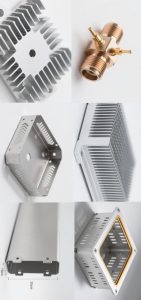
5 CNC Strategies for Drone Lightweighting
Strategy 1: Topology Optimization
What it is: Using software to analyze stress paths and remove material where it’s not needed.
Before Optimization:
- Solid blocks or uniformly thick plates
- Material used where it serves no structural purpose
- Heavy, inefficient designs
After Optimization:
- Organic, lattice-like structures
- Material only where stress actually travels
- Weight reductions of 40-70% possible
Implementation with CNC:
- Requires 3D machining capabilities
- Special attention to thin feature machining
- May require 5-axis machining for complex geometries
Case Study: A surveillance drone’s camera gimbal mount was topology optimized, reducing weight from 220g to 85g (61% reduction) while maintaining all strength requirements.
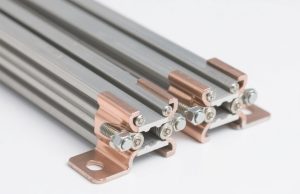
Strategy 2: Intelligent Ribbing and Webbing
The Problem: Solid plates are heavy. But how thin can you go before losing strength?
The Solution: Strategic rib patterns that maintain stiffness with minimal material.
Common Patterns:
- Honeycomb: Maximum strength with minimum weight
- Triangular: Excellent for directional strength
- Custom patterns: Optimized for specific load cases
CNC Considerations:
- Thin-wall machining expertise required
- Tool deflection management critical
- May require multiple setups for deep ribs
Strategy 3: Integrated Design
Moving from: Multiple assembled components
To: Single, complex machined parts
Benefits:
- Eliminates fasteners and connectors (weight savings)
- Reduces assembly time and cost
- Improves structural integrity (no weak joints)
Example: Instead of separate motor mount plates, arms, and connection brackets, design a single CNC-machined arm with integrated motor mount and connection features.
Strategy 4: Wall Thickness Optimization
Not All Walls Need to Be Equal:
- High-stress areas: Thicker walls
- Low-stress areas: Thinner walls
- Transition zones: Gradual thickness changes
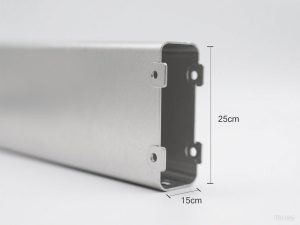
Practical Guidelines for Drones:
- Main structural members: 2-3mm walls
- Secondary structures: 1.5-2mm walls
- Non-structural covers: 1-1.5mm walls
Important: Below 1mm walls require specialized machining techniques and increase cost significantly.
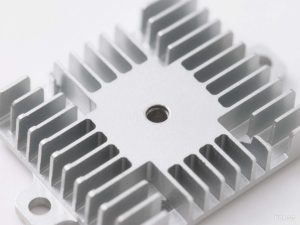
Strategy 5: Hole Pattern Optimization
Every Hole Serves Two Purposes:
- Functional purpose (mounting, wiring, ventilation)
- Weight reduction opportunity
Smart Hole Design:
- Position holes in low-stress areas
- Use patterns that maintain structural integrity
- Consider elongated slots instead of round holes where possible
- Add lightening holes in non-critical areas
Special Considerations for Different Drone Types
Consumer/Prosumer Drones
- Priority: Cost-effective lightweighting
- Typical materials: 6061 aluminum, some carbon fiber
- Weight targets: Aggressive but cost-constrained
- Our approach: Focus on high-impact, low-cost optimizations
Industrial Inspection Drones
- Priority: Durability and reliability
- Typical materials: 7075 aluminum, strategic carbon fiber
- Weight targets: Important but secondary to robustness
- Our approach: Balance lightweighting with impact resistance
Delivery/Heavy-Lift Drones
- Priority: Maximum payload capacity
- Typical materials: 7075 aluminum, titanium for critical joints
- Weight targets: Critical—every gram saved means another gram of payload
- Our approach: Aggressive optimization with safety margins
Racing Drones
- Priority: Extreme lightweighting and stiffness
- Typical materials: Carbon fiber composites, 7075 aluminum
- Weight targets: As light as physically possible
- Our approach: Pushing material and manufacturing limits
The Manufacturing Process: From Design to Flight
Step 1: Stress Analysis and Optimization
- Finite Element Analysis (FEA) to identify stress concentrations
- Topology optimization software runs
- Identification of critical vs. non-critical areas
Step 2: Design for Manufacturability
- Convert optimized designs to manufacturable geometry
- Add necessary features for fixturing and machining
- Ensure all features are within CNC capabilities
Step 3: CNC Programming and Setup
- Specialized toolpaths for thin features
- Multiple setup planning for complex parts
- Tool selection for optimal surface finish and accuracy
Step 4: Machining with Precision
- Careful monitoring of thin-wall sections
- Thermal management to prevent distortion
- In-process measurement of critical features
Step 5: Validation and Testing
- Dimensional verification
- Weight measurement (often to 0.1g accuracy)
- Functional testing where applicable
Common Mistakes in Drone Lightweighting
Mistake 1: Over-Optimization
The Problem: Removing so much material that the structure becomes fragile
The Solution: Always maintain safety factors and consider real-world impacts
Mistake 2: Ignoring Manufacturing Constraints
The Problem: Designing features that are impossible or extremely expensive to machine
The Solution: Involve manufacturing expertise early in the design process
Mistake 3: Material Misapplication
The Problem: Using expensive materials where cheaper ones would work
The Solution: Strategic material placement based on actual stress requirements
Mistake 4: Neglecting Assembly Considerations
The Problem: Lightweight parts that are difficult or impossible to assemble
The Solution: Design for assembly from the beginning
Measuring Success: Key Performance Indicators
Weight Reduction Metrics
- Overall weight reduction: Target 20-40% for most applications
- Weight distribution optimization: Not just lighter, but better balanced
- Gram-per-dollar efficiency: Cost of weight reduction vs. benefits gained
Performance Improvements
- Flight time increase: Direct correlation with weight reduction
- Payload capacity improvement: Critical for commercial drones
- Maneuverability enhancement: Especially important for racing drones
Manufacturing Metrics
- Machining time: Lightweight designs shouldn’t dramatically increase machining time
- Material utilization: Efficient use of raw materials
- Assembly efficiency: Fewer parts, easier assembly
Future Trends in Drone Lightweighting
Additive Manufacturing Integration
- 3D printed lattice structures combined with CNC machined interfaces
- Custom internal geometries impossible with traditional machining
- Material combinations for localized properties
Smart Materials and Structures
- Materials that change properties based on conditions
- Integrated sensing for real-time structural health monitoring
- Self-healing materials for increased durability
AI-Driven Optimization
- Machine learning algorithms that suggest optimal designs
- Predictive performance modeling
- Automated design-to-manufacturing workflows
Your Lightweighting Roadmap
Phase 1: Assessment (Week 1-2)
- Analyze current designs for weight-saving opportunities
- Identify high-impact, low-effort improvements
- Set realistic weight reduction targets
Phase 2: Optimization (Week 3-6)
- Implement topology optimization on key components
- Test prototype designs
- Validate performance improvements
Phase 3: Implementation (Week 7-12)
- Finalize optimized designs
- Establish manufacturing processes
- Train assembly teams on new components
Phase 4: Continuous Improvement (Ongoing)
- Monitor field performance
- Gather data for further optimization
- Stay updated on new materials and techniques
How Lenchor Precision Supports Drone Manufacturers
Our Specialized Capabilities
- Thin-wall machining expertise: Down to 0.8mm walls in aluminum
- Multi-axis machining: Complex geometries in single setups
- Material knowledge: Optimal alloys for specific applications
- Quality systems: Consistent, reliable production
Our Process for Drone Components
- Collaborative design review: We work with your team from day one
- DFM optimization: We ensure designs are both lightweight and manufacturable
- Prototype development: Rapid iteration to validate designs
- Production scaling: Efficient transition to volume manufacturing
Why Drone Companies Choose Us
- Experience: Hundreds of successful drone component projects
- Precision: Tolerances to ±0.05mm for perfect fit and alignment
- Efficiency: Optimized processes that save time and cost
- Partnership: We become an extension of your engineering team
Conclusion: The Art and Science of Lightweighting
Drone lightweighting isn’t just about making things thinner or drilling more holes. It’s a sophisticated engineering discipline that balances material science, structural mechanics, and manufacturing technology. When done right, it transforms your drones from merely functional to exceptionally capable.
The most successful drone manufacturers understand that lightweighting isn’t a one-time effort—it’s a continuous process of refinement and optimization. And with the right manufacturing partner, every iteration brings you closer to the perfect balance of strength, weight, and performance.
Remember: In the world of drones, gravity is the constant enemy. Every gram you defeat is a victory in extended flight time, increased payload, or improved handling. And with today’s CNC machining capabilities, those victories are more achievable than ever.
Ready to lighten your load? Whether you’re designing your first drone or optimizing your hundredth, we can help you find the perfect balance between strength and weight. Contact us today for a free design review and lightweighting assessment. Email your CAD files to our email or visit our website to learn how we’re helping drone manufacturers fly higher, longer, and stronger.