
Walk into any operating room or open any sterile medical kit, and you’ll find a world built on precision, reliability, and safety. A critical, yet often unseen, foundation of this world is the material from which many components are made: stainless steel. Specifically, grades 304 and 316 stainless steel are the undisputed champions of the medical device industry.
From surgical instruments and tools to implantable medical device components and complex diagnostic equipment housings, the choice of material is never arbitrary. So, why do these two alloys consistently top the list for medical grade CNC machining? This article delves into the material science and practical reasons behind their dominance, helping you understand why they are the default choice for creating safe, durable, and effective healthcare solutions.
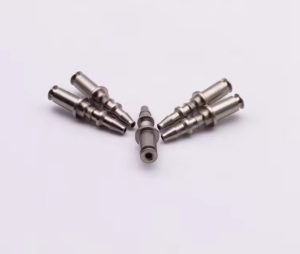
The Non-Negotiable Trio: Corrosion Resistance, Biocompatibility, and Sterilization
The medical environment is uniquely harsh. Materials must withstand repeated, aggressive sterilization cycles, exposure to bodily fluids, and rigorous cleaning chemicals—all while maintaining their structural integrity and, most importantly, not harming the patient. This demands a specific set of properties:
- Exceptional Corrosion Resistance: Prevents rust and degradation, ensuring device longevity and preventing the release of harmful metallic ions.
- Biocompatibility: The material must not elicit a negative biological response, cause toxicity, or provoke allergic reactions when it contacts tissue or bodily fluids.
- Sterilization Resilience: The material must maintain its properties after repeated exposure to high-pressure steam (autoclaving), chemical sterilants, gamma radiation, or ethylene oxide gas.
Let’s see how 304 and 316 stainless steel meet these challenges.
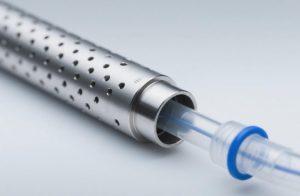
A Tale of Two Alloys: 304 vs. 316 Stainless Steel
While both are part of the austenitic stainless steel family and share a common foundation, a single elemental addition makes a world of difference.
304 Stainless Steel: The Reliable Workhorse
- Composition: 18% Chromium, 8% Nickel.
- Key Property: Excellent general corrosion resistance.
- Why it’s used in medical devices: 304 stainless steel forms a robust, passive chromium oxide layer on its surface that protects it from oxidation and resists organic chemicals and many common sterilizing agents. It offers a fantastic balance of performance, machinability for medical prototypes, and cost-effectiveness.
- Ideal for:
- Surgical instrument handles and forceps
- Medical equipment housings and enclosures
- Non-implantable medical tooling
- Components for drug delivery systems that are not in long-term contact with aggressive fluids.
316 Stainless Steel: The Champion for Harsh Environments
- Composition: 16% Chromium, 10% Nickel, and the crucial addition of 2-3% Molybdenum.
- Key Property: Superior resistance to pitting and crevice corrosion, especially from chlorides.
- Why it’s used in medical devices: The molybdenum is the game-changer. It dramatically enhances the alloy’s resistance to chlorides, which are found in saline solutions, bodily fluids, and some disinfectants. This makes 316 stainless steel the premier choice for any application where the device will have prolonged contact with the human body or be exposed to more corrosive environments.
- Ideal for:
- Implantable devices such as bone screws, orthopedic cables, and spinal fixation devices (often in the 316L “Low-carbon” variant to prevent sensitization).
- Components for MRI machines and other imaging equipment.
- Surgical staples and clips.
- In-vivo diagnostic instrument components.
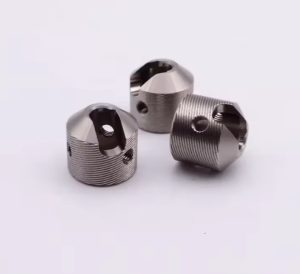
Head-to-Head Comparison in a Medical Context
| Parameter | 304 Stainless Steel | 316/L Stainless Steel |
|---|---|---|
| Corrosion Resistance | Excellent for general use | Superior, especially against chlorides & bodily fluids |
| Biocompatibility | High | Very High (L-grade is preferred for implants) |
| Mechanical Strength | Good | Slightly Higher |
| Machinability | Good | Good (but can be gummier than 304) |
| Cost | More Cost-Effective | Premium (due to Molybdenum content) |
| Best For | External devices, instrument handles, housings | Implants, critical surgical tools, components in corrosive environments |
The Critical Role of “L” Grades: 316L for Implantables
You will often see medical implant CNC machining specified for 316L stainless steel. The “L” stands for “Low Carbon” (carbon content < 0.03%).
- The Problem (Sensitization): When standard 316 is heated during welding or certain heat treatments, carbon can precipitate out and combine with chromium at the grain boundaries, forming chromium carbides. This depletes the chromium in the surrounding areas, compromising the protective oxide layer and making those zones susceptible to corrosion.
- The Solution (316L): By reducing the carbon content, 316L minimizes the risk of this “sensitization,” ensuring excellent corrosion resistance remains intact after welding or processing. This is non-negotiable for surgical guide components or any implantable device that will remain inside the body, where even microscopic corrosion cannot be tolerated.
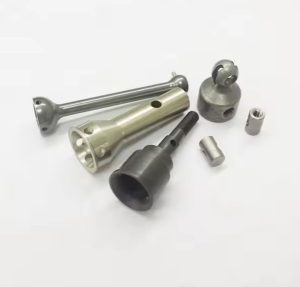
CNC Machining Considerations for Medical-Grade Stainless Steel
Producing a reliable medical component goes beyond just selecting the right raw material. The CNC machining process itself must be controlled to preserve these critical properties.
- Maintaining Biocompatibility: The machining process must not introduce contaminants. Using dedicated, clean tools and coolants is essential. The final parts often require electropolishing or passivation—chemical processes that remove free iron particles from the surface and enhance the natural chromium oxide layer, maximizing corrosion resistance and creating an ultra-smooth, easy-to-clean surface.
- Achieving Surgical Sharpness and Precision: For custom surgical instrument manufacturing, the CNC machining process must be capable of holding extremely tight tolerances and producing razor-sharp, burr-free edges. This requires high-quality tooling, rigid machines, and expert programming.
- Surface Finish is Critical: A superior surface finish (low Ra value) is not just about aesthetics; it prevents bacteria and contaminants from adhering to the surface, which is crucial for sterility. Precision CNC milling can achieve the fine surface finishes required for minimally invasive surgical tools.
Conclusion: Partnering with a Med-Savvy Machine Shop
The choice between 304 and 316 stainless steel ultimately hinges on the device’s application, its required service life, and the biological environment it will encounter. While 304 is a superb, cost-effective choice for external devices, 316 and 316L are the materials of choice for life-critical and implantable applications due to their superior corrosion resistance.
At Lenchor, we understand that machining components for the medical industry carries a profound responsibility. We don’t just cut metal; we deliver trust. Our expertise in medical device CNC machining ensures that every component, whether from 304 or 316L stainless steel, is manufactured to the highest standards of precision, cleanliness, and traceability. We help you navigate material selection and implement the necessary post-processing to ensure your device performs safely and reliably.
Ready to engineer the next generation of medical devices with confidence? Contact us today to discuss your project and leverage our expertise in precision medical component manufacturing.
Get a Free DFM Consultation for Your Medical Project