
Introduction
In the precision world of CNC machining, material selection isn’t just a first step—it’s the most critical decision determining the success, longevity, and cost-effectiveness of your component. Among the vast array of available metals, the austenitic stainless steel family, particularly grades 304, 316, and 316L, stands out for its exceptional blend of strength, corrosion resistance, and manufacturability.
But which one is right for your application? Choosing the wrong grade can lead to premature failure, skyrocketing production costs, or manufacturing headaches. This comprehensive guide delves into the nitty-gritty details of 304 vs 316 vs 316L stainless steel, providing a professional performance comparison from a CNC machining perspective. We’ll explore their corrosion resistance, mechanical strength, CNC machining difficulty, and cost implications to give you the clarity needed for your next project.
Understanding the Austenitic Family: A Quick Primer
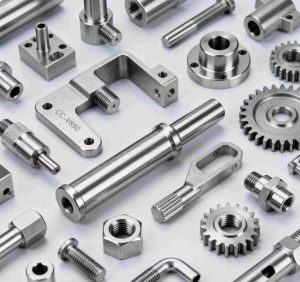
Before we dive into the comparison, it’s essential to understand what binds these grades together. 304, 316, and 316L are all part of the 300-series austenitic stainless steels. They are non-magnetic, offer excellent toughness, and derive their corrosion resistance from a high chromium content (typically 16-18%) and the addition of nickel, which stabilizes their austenitic crystal structure.
The key differences lie in their alloy chemistry, specifically the elements added to enhance specific properties.
Head-to-Head: The Key Property Comparison
Let’s break down the performance of these three grades across the most critical parameters for design and manufacturing.
1. Corrosion Resistance: The Defining Battle
This is often the primary differentiator and the main reason for choosing 316 over 304.
- 304 Stainless Steel: The most versatile and widely used stainless steel. Its corrosion resistance is excellent for a wide range of environments, particularly against organic chemicals and food acids. It performs well in mild atmospheric conditions, fresh water, and many common service environments. However, it has a critical weakness: it is susceptible to chloride-induced pitting and crevice corrosion. This makes it a poor choice for marine applications, coastal environments, or anywhere exposed to de-icing salts or potent industrial chemicals.
- 316 & 316L Stainless Steel: This is where 316 grades pull decisively ahead. The defining addition is Molybdenum (typically 2-3%). Molybdenum dramatically increases resistance to pitting and crevice corrosion in chloride-laden settings. This makes 316 stainless steel the go-to choice for:
- Marine hardware and components
- Chemical processing equipment
- Pharmaceutical and medical devices
- Architectural applications in coastal regions
- 316L offers the same core corrosion resistance as 316. The “L” stands for “Low Carbon,” which we will discuss in the machining section, but it provides superior resistance to sensitization and intergranular corrosion after welding.
Verdict: For maximum corrosion resistance in harsh environments, 316 and 316L are unequivocally superior. 304 is sufficient for general-purpose and non-aggressive environments.
2. Mechanical Strength and Hardness
While all three grades are strong and ductile, there are subtle differences in their strength profiles.
- 304 Stainless Steel: Offers a good balance of strength and ductility. Its typical tensile strength is around 515 MPa (75 ksi) with a minimum yield strength of 205 MPa (30 ksi).
- 316 Stainless Steel: The addition of molybdenum provides a slight increase in strength compared to 304, especially at elevated temperatures. Its typical tensile strength is around 515 MPa (75 ksi) with a marginally higher yield strength of 205 MPa (30 ksi). The difference is often negligible at room temperature for most design purposes.
- 316L Stainless Steel: Due to its lower carbon content, 316L has a slightly lower yield and tensile strength than standard 316. Its typical tensile strength is around 485 MPa (70 ksi) with a yield strength of 170 MPa (25 ksi). However, through cold working during machining or other processes, its strength can be increased.
Verdict: For room temperature applications requiring the highest strength, standard 316 has a slight edge. However, 316L’s strength is often more than adequate and is preferred when welding is involved.
3. CNC Machinability and Fabrication
This is where the rubber meets the road for machinists. All austenitic stainless steels are considered challenging to machine compared to carbon steel, but they are certainly machinable with the right techniques.
- Machinability Rating: On a scale where 1212 carbon steel is 100%, 304 stainless steel is typically rated at about 45%. 316 and 316L stainless steel are generally rated lower, around 40-45%, making them slightly more difficult to machine.
- Why are they difficult? These grades work-harden rapidly. This means that if the CNC machine’s cutting tools are not sharp, feeds are too slow, or depths of cut are too shallow, the material can become harder at the point of cutting, leading to excessive tool wear, poor surface finish, and potential workpiece damage.
- 304 vs 316 Machining: The slight toughness imparted by molybdenum in 316 can make it gummier and produce stringier chips than 304, requiring optimized chip-breaking strategies.
- The 316L Advantage in Welding: While not directly a machining property, many machined components require post-processing or assembly via welding. This is 316L’s moment to shine. Its low carbon content (<0.03%) prevents “sensitization,” a process where carbon precipitates at grain boundaries during welding, creating zones susceptible to corrosion. For any component that will be welded, 316L is the unequivocal choice over 316 or 304.
Expert CNC Machining Tips for These Grades:
- Use rigid setups and powerful machinery to maintain consistent feeds.
- Employ sharp, premium-grade carbide tools with positive rake angles.
- Maintain high feed rates and adequate depth of cut to “stay ahead” of the work-hardening layer.
- Use high-pressure, copious coolant to dissipate heat and break chips effectively.
4. Cost Analysis: Balancing Budget and Performance
Cost is always a decisive factor, and the hierarchy here is clear.
- 304 Stainless Steel: This is the most cost-effective option among the three. Its widespread availability and simpler alloy composition (no molybdenum) make it the economical choice for projects where its corrosion resistance is sufficient.
- 316 & 316L Stainless Steel: These are premium grades. The addition of molybdenum and nickel, which are more expensive alloying elements, increases the raw material cost. 316 stainless steel typically costs 20-40% more than 304, with 316L often carrying a small additional premium over standard 316 due to more precise chemistry control.
The key is to perform a total cost-of-ownership analysis. While 304 has a lower upfront stainless steel cost, if it fails prematurely in a corrosive environment, the cost of downtime, replacement, and repair will far outweigh the initial savings of not choosing 316 or 316L.
CNC Machining Material Selection Guide: Summary Table
| Property | 304 Stainless Steel | 316 Stainless Steel | 316L Stainless Steel |
|---|---|---|---|
| Key Alloy | 18% Cr, 8% Ni | 16% Cr, 10% Ni, 2% Mo | 16% Cr, 10% Ni, 2% Mo, Low C |
| Corrosion Resistance | Excellent (mild environments) | Superior (harsh/chloride) | Superior (harsh/chloride) |
| Strength | Good | Slightly Better | Slightly Lower (but can be cold-worked) |
| Machinability | Fair (Rating ~45%) | Slightly More Difficult (~40%) | Slightly More Difficult (~40%) |
| Weldability | Good | Fair | Excellent |
| Cost | Lowest | Moderate (~20-40% > 304) | Moderate to High (Slightly > 316) |
| Best For | General purpose, consumer goods, indoor hardware, non-corrosive environments. | Marine, chemical, medical, and architectural applications exposed to chlorides. | Welded assemblies in corrosive environments; superior post-weld corrosion resistance. |
Final Selection Recommendations for Your CNC Project
Making the right choice boils down to your application’s specific demands.
- Choose 304 Stainless Steel if:
- Your component will be used in a mild, indoor environment.
- The application involves fresh water, mild acids, or common chemicals.
- Budget is a primary constraint, and the superior corrosion resistance of 316 is not required.
- Examples: Kitchen appliance parts, architectural trim, fasteners for indoor use, tanks for non-corrosive liquids.
- Choose 316 Stainless Steel if:
- Your component will face exposure to saltwater, chlorides, or aggressive industrial chemicals.
- You need maximum pitting and crevice corrosion resistance for a non-welded part.
- The application is in marine, chemical processing, or pharmaceutical industries.
- Examples: Boat fittings, chemical pumps, pharmaceutical processing equipment, coastal architectural elements.
- Choose 316L Stainless Steel if:
- All the conditions for 316 apply, and your component will be welded.
- You require the absolute best intergranular corrosion resistance after fabrication.
- The slight sacrifice in initial strength is acceptable (or can be compensated for via design).
- Examples: Welded pressure vessels, piping systems, manifolds, and any critical welded assembly for corrosive service.
Partner with Lenchor for Your Precision Stainless Steel CNC Machining
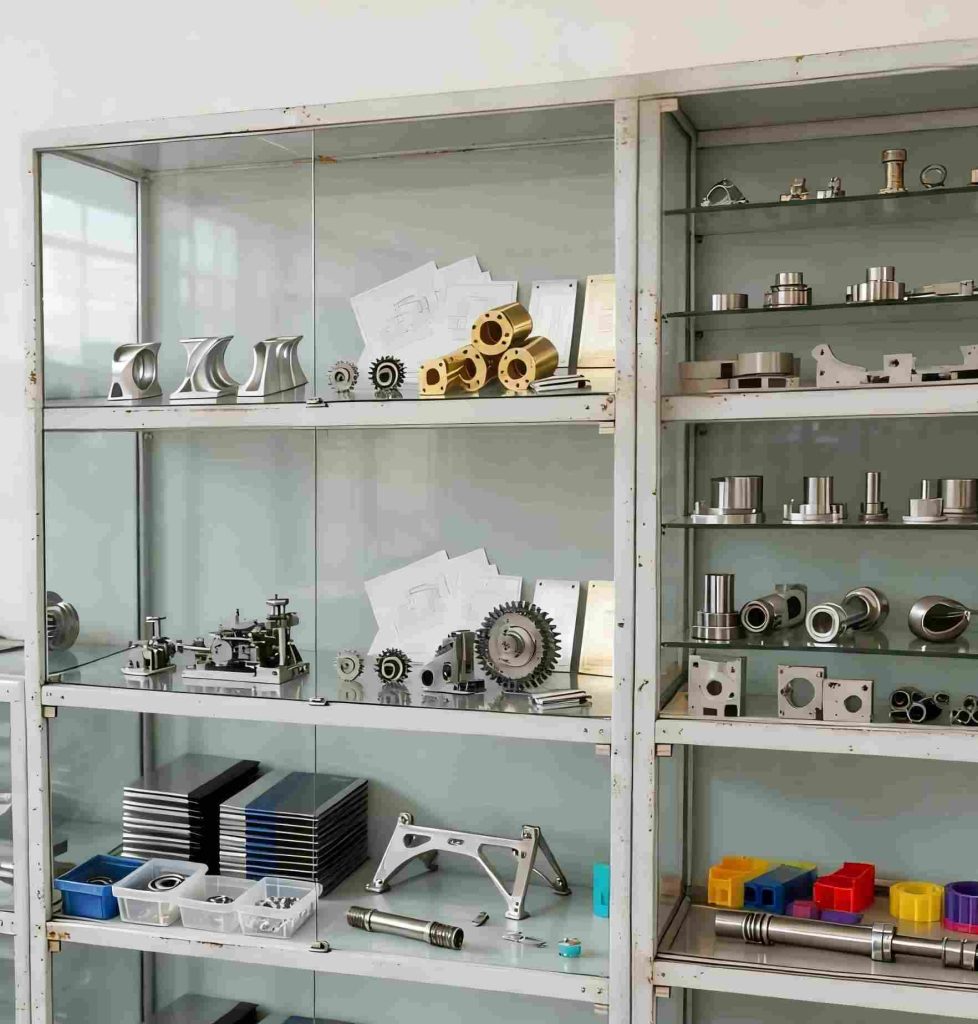
Navigating the nuances of material science is complex, but you don’t have to do it alone. At Lenchor, we are experts in precision CNC machining services for a wide range of materials, including the entire stainless steel family. Our engineering team can help you analyze your application’s requirements and select the optimal grade—whether it’s cost-effective 304 or highly corrosion-resistant 316L—to ensure your part performs flawlessly in its intended environment.
We combine expert material selection with state-of-the-art CNC equipment and rigorous quality control to deliver components that meet your exact specifications, on time and on budget.
Ready to get started on your next project? Contact us today for a quote and let our expertise guide you to the perfect material and manufacturing solution.