
Introduction
In the world of manufacturing and precision machining, jigs and fixtures are the unsung heroes that guarantee repeatability, accuracy, and efficiency. While metals like aluminum and steel are common choices, a silent revolution is underway with non-metallic materials. Among them, two stand out for their unique and often irreplaceable properties: Bakelite (Phenolic) and Polyurethane.
Choosing the wrong material for a fixture can lead to scrapped parts, inconsistent quality, and costly downtime. This article delves into a professional comparison of Bakelite and Polyurethane for jigs and fixtures, highlighting their specific strengths and the scenarios where each truly shines. Understanding their performance is key to optimizing your manufacturing process.
Understanding the Contenders: A Brief Overview
Before we dive into the comparison, let’s meet our two competitors.
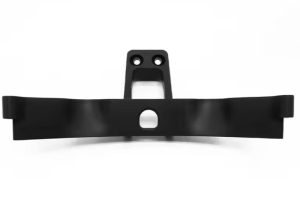
- Bakelite (Phenolic Resin): This is a classic thermoset plastic known for its exceptional rigidity, dimensional stability, and thermal and electrical insulation properties. It’s a hard, strong material that machines beautifully to tight tolerances.
- Polyurethane (Urethane, PU): This is a versatile polymer celebrated for its remarkable elasticity, abrasion resistance, and impact absorption. It’s available in a wide range of hardness levels (from soft like a rubber band to hard like a skateboard wheel), allowing for incredible customization.
The core difference lies in their fundamental nature: Bakelite is rigid and hard, while Polyurethane is flexible and resilient.
Head-to-Head: Performance in Fixture Applications
Let’s break down their performance across the most critical parameters for jig and fixture design.
1. Rigidity vs. Flexibility: The Core Dichotomy
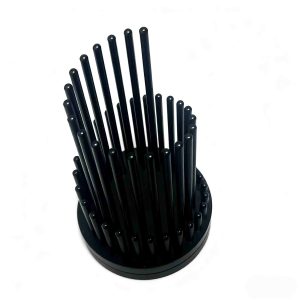
- Bakelite: This is your go-to material when absolute rigidity and dimensional stability are non-negotiable. A Bakelite fixture will not flex or bend under load, ensuring that the part being held remains in a precise, unchanging position. This is critical for high-precision machining operations where any deflection translates directly into a dimensional error on the finished part.
- Polyurethane: Polyurethane excels in applications requiring cushioning and compliance. Its ability to deform slightly under pressure makes it perfect for holding delicate, fragile, or highly finished parts without causing marring, denting, or distortion. It conforms to minor surface irregularities, providing a secure, non-slip grip.
2. Wear Resistance and Durability
- Bakelite: It offers good wear resistance and a low coefficient of friction. This makes it excellent for applications like sliding supports or wear plates, where metal parts might gall or stick. However, under high point loads, it can be brittle and may crack or chip.
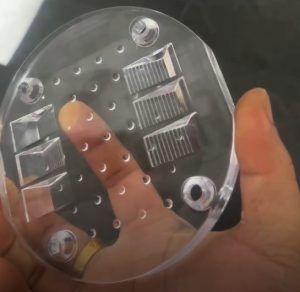
- Polyurethane: This is where Polyurethane often becomes unbeatable for durability. Its exceptional abrasion resistance makes it ideal for fixtures that are subject to constant loading and unloading of parts. It can withstand significant impact and repetitive stress that would shatter a more rigid material like Bakelite.
3. Thermal and Electrical Properties
- Bakelite: This is a key area of superiority for Bakelite. It is an excellent electrical insulator and thermally resistant. This makes it the undisputed choice for:
- Welding Fixtures: It will not conduct heat or electricity, preventing arcing and distortion.
- EDM (Electrical Discharge Machining) Fixtures: Its electrical insulation is essential for safety and process integrity.
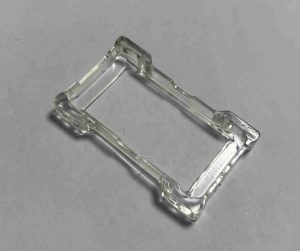
- Polyurethane: Standard polyurethanes are not designed for high-temperature applications and can soften or degrade. They also do not offer the same level of electrical insulation as Bakelite, making them unsuitable for electrical processes.
4. Machinability and Fabrication
- Bakelite: It is a dream to machine for any CNC shop. It produces clean, sharp edges and can be held to very tight tolerances, much like a free-machining metal. This allows for the creation of complex, high-precision fixture geometries.
- Polyurethane: Machining soft, flexible polyurethane can be challenging, as it tends to gum up tools and is difficult to hold steady. For custom fixtures, polyurethane is often cast into specific shapes or purchased as standard stock (sheets, rods, bars) and then finished to size.
When to Choose Which Material: A Practical Guide
| Application Scenario | Recommended Material | Why It’s the Best Choice |
|---|---|---|
| High-Precision Machining Fixture | Bakelite | Its rigidity ensures zero deflection, guaranteeing part accuracy. |
| Welding or EDM Fixture | Bakelite | Excellent thermal and electrical insulation protects the fixture and the process. |
| Clamping Pads for Delicate Parts | Polyurethane | Its cushioning prevents damage to soft materials like aluminum or polished surfaces. |
| Locating Pins & Nesting Blocks | Bakelite | Hard and dimensionally stable, providing a reliable, repeatable datum. |
| Impact-Absorbing Stops or Hammers | Polyurethane | High impact resistance and elasticity absorb energy, reducing noise and damage. |
| Abrasion-Resistant Conveyor Guides | Polyurethane | Outstanding wear resistance extends service life in high-cycle applications. |
Conclusion: Leveraging Unique Strengths for Superior Fixtures
The choice between Bakelite and Polyurethane for jigs and fixtures is not about finding a “better” material, but about selecting the right tool for the job. Their properties are not overlapping but complementary.
- Choose Bakelite when your priority is precision, stability, and insulation. It is the engineer’s choice for rigid, reliable, and thermally/electrically inert fixtures.
- Choose Polyurethane when your priority is protection, grip, and durability against impact and wear. It is the practical solution for safeguarding expensive components and thriving in high-cycle environments.
By understanding these non-metallic materials, you can design fixtures that not only hold parts but also actively improve your manufacturing process by protecting workpiece quality, increasing tooling life, and enhancing overall safety.
Unlock the Full Potential of Your Fixture Design with Lenchor
At Lenchor, we are experts in material science and precision manufacturing. We don’t just machine parts; we provide solutions. Our team can help you select the ideal material—whether it’s precision-machined Bakelite or durable Polyurethane—and manufacture your jigs and fixtures to the highest standards of accuracy and quality.
Ready to build a better fixture? Contact our engineering team today for a consultation and see how our expertise can solve your toughest manufacturing challenges.
Contact Us for a Custom Fixturing Solution!