
If you’ve ever requested quotes from multiple CNC machining suppliers for the same part, you’ve likely experienced confusion: why do prices sometimes vary by 50%, 100%, or even more? This pricing disparity can feel frustrating and mysterious, especially when you’re trying to manage project budgets effectively.
The truth is, a CNC machining quote isn’t a single number—it’s the culmination of dozens of factors that suppliers evaluate differently. Understanding these variables not only helps you make sense of quotations but also empowers you to optimize your designs for cost-efficiency.
In this article, we’ll dissect a typical CNC machining quote to reveal what each component really means and why pricing differs between suppliers.
The Foundation: What Goes Into a CNC Machining Quote?
Every reputable machine shop calculates quotes based on some combination of these core elements:
- Material Costs
- Machine Time (Programming & Setup)
- Labor & Overhead
- Post-Processing & Finishing
- Profit Margin & Quality Assurance
Let’s explore how each of these factors creates variation between quotations.
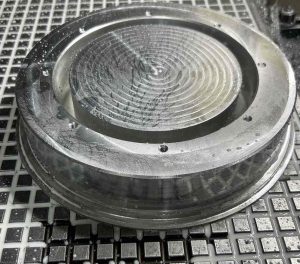
1. Material Selection: More Than Just Raw Stock Price
The most obvious cost driver is your chosen material, but the true expense goes beyond the price per kilogram.
Key Considerations:
- Material Grade: Are you using commercial-grade aluminum 6061 or aircraft-grade 7075? The latter can cost 2-3 times more.
- Material Form: Standard stock sizes are cheapest. If your part requires an unusual sheet thickness or bar diameter, material waste and cost increase.
- Material Waste: Complex parts may only use 20-30% of the original stock material—the rest becomes chips. Efficient nesting minimizes this, but some waste is inevitable.
Why Quotes Vary:
Some shops include material waste in their calculations, while others assume optimal utilization. Suppliers with higher volume purchasing may also get better material prices they can pass along to customers.
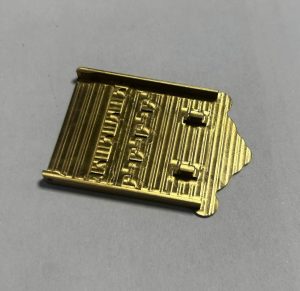
2. Machine Time: The Hidden Economics of CNC Programming
Machine time consists of two distinct phases that shops calculate differently.
Programming & Setup:
- CAM Programming: Converting your CAD file into machine instructions (G-code) requires skilled engineering time.
- Fixture Design: Complex parts may need custom fixtures, adding hours to setup.
- First Article Inspection: Verifying the first part meets specifications takes additional time.
Cycle Time:
- Machine Efficiency: A 3-axis machine may be slower but cheaper per hour than a 5-axis machine that completes the job faster.
- Cutting Strategy: Conservative feeds/speeds may increase machine time but reduce tooling costs and risks.
Why Quotes Vary:
Some shops charge a flat programming/setup fee, while others build it into their hourly machine rate. Cycle time estimates also differ based on the machinist’s risk tolerance and equipment capabilities.
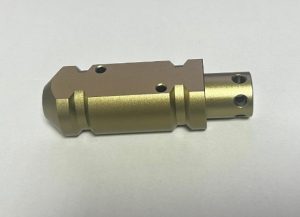
3. Part Design Complexity: The Geometry Premium
Simple brackets cost less than intricate enclosures—but why?
Design Factors That Increase Cost:
- Deep Pockets: Requiring long-reach tools and multiple slow passes
- Thin Walls: Needing lighter cuts and specialized strategies to prevent vibration
- Tight Tolerances: Requiring slower machining, specialized tooling, and more inspection time
- Complex Contours: Necessitating 5-axis machining or multiple setups
Why Quotes Vary:
Different manufacturers have different capabilities. A shop with advanced 5-axis equipment might quote less for a complex part than one that would need to complete it in multiple 3-axis setups.
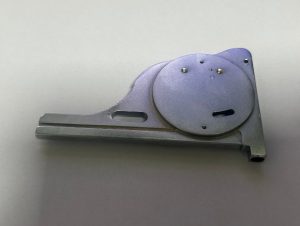
4. Quantity & Economies of Scale
The relationship between quantity and unit price isn’t always linear.
Prototype Quantities (1-10 parts):
- Setup and programming costs dominate
- Higher cost per part but lower total investment
- Ideal for functional prototypes and design verification
Production Quantities (50+ parts):
- Machine time and material costs dominate
- Lower cost per part but higher total investment
- Suitable for end-use parts and manufacturing runs
Why Quotes Vary:
Some shops optimize for low-volume quick-turn work, while others prefer high-volume production. Their pricing structure will reflect this specialization.
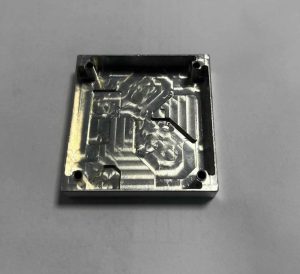
5. Post-Processing & Finishing: The Final 20% That Can Cost 80%
Many buyers underestimate how much finishing operations affect total cost.
Common Finishing Options:
- Deburring: Manual or automated edge cleaning
- Surface Finishing: Bead blasting, brushing, or polishing
- Anodizing: Type II (corrosion resistance) or Type III (hard coat)
- Painting & Powder Coating: Multiple stages of preparation and application
Why Quotes Vary:
Some shops have in-house finishing capabilities (usually cheaper), while others subcontract these services (adding markup). The quality standards for finishing also vary significantly between suppliers.
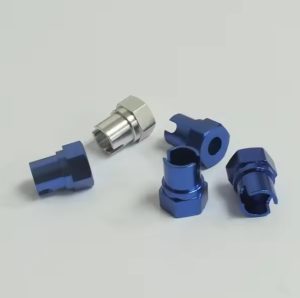
Decoding a Sample Quote: A Real-World Example
Let’s examine a hypothetical quote for an aluminum 6061 mounting bracket:
Supplier A: $187.50 per part
- Material: $25 (includes 30% waste factor)
- Programming: $75 (flat fee)
- Machine Time: $65 (2 hours at $65/hour)
- Finishing: $22.50 (basic deburring and bead blast)
Supplier B: $128.75 per part
- Material: $18 (bulk pricing, minimal waste)
- Programming: $25 (amortized across multiple parts)
- Machine Time: $75 (1.5 hours at $50/hour)
- Finishing: $10.75 (minimal deburring only)
Analysis: Supplier B appears cheaper but may be cutting corners on programming detail, using less experienced staff, or offering inferior finishing. Supplier A’s higher price might reflect more thorough engineering review and quality control.
How to Get Accurate, Comparable Quotes
To ensure you’re comparing apples to apples:
- Provide Complete Information: Include material specifications, tolerances, and surface finish requirements
- Request Itemized Quotes: Ask suppliers to break down costs by material, labor, and finishing
- Specify Quality Standards: Mention if you need aerospace-quality inspection or standard commercial tolerances
- Ask About Lead Times: Rush jobs typically cost 25-50% more
The True Value Beyond Price
The cheapest quote isn’t always the best value. Consider what might be missing from a low bid:
- Quality Assurance: Inspection reports, material certifications
- Engineering Support: Design for manufacturability feedback
- Communication: Responsive customer service and project updates
- Reliability: On-time delivery and consistent quality
At our facility, we believe in transparent pricing and collaborative engineering. We provide detailed quotes that explain exactly what you’re paying for, along with design optimization suggestions that can reduce your costs without compromising part quality.
Ready to get a transparent, detailed quote for your next project? Upload your CAD files today and experience the difference that clear communication and expert engineering makes.