
The automation industry operates on a simple principle: consistency is king. From high-speed packaging lines to precision assembly robots, every component must perform reliably through millions of cycles with near-zero failure rates. This relentless demand for reliability makes CNC machining the manufacturing method of choice for critical automation components.
However, not all CNC parts are created equal. The wrong material choice or insufficient tolerances can lead to catastrophic downtime in a fully automated production cell. This guide explores the optimal material selection and precision requirements for CNC parts in automation systems, helping you design components that withstand the test of time and motion.
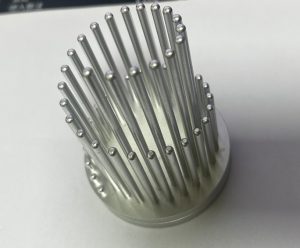
Why Material Choice Matters in Automation
In automation environments, components face a unique combination of challenges:
- Continuous Operation: 24/7 runtime demands exceptional fatigue resistance
- Dynamic Loads: Rapid acceleration/deceleration creates shock loads
- Wear & Friction: Repeated motion necessitates excellent wear characteristics
- Environmental Factors: Exposure to oils, coolants, and temperature variations
Selecting the appropriate material is the first line of defense against these challenges.
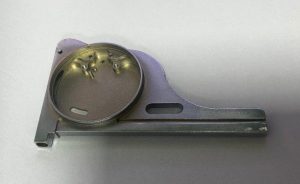
Proven Material Choices for Common Automation Components
1. Aluminum Alloys: The Workhorse of Automation
Aluminum dominates automation component manufacturing for good reason:
- 6061 Aluminum: The default choice for structural components
- Best for: Robot mounting brackets, sensor mounts, enclosure frames
- Why: Excellent strength-to-weight ratio, good machinability, cost-effective
- Precision requirement: ±0.1mm typically sufficient for structural applications
- 7075 Aluminum: For high-stress dynamic applications
- Best for: Robotic arm end-effectors, gantry system components
- Why: Superior strength comparable to many steels while remaining lightweight
- Precision requirement: ±0.05mm for critical interfaces
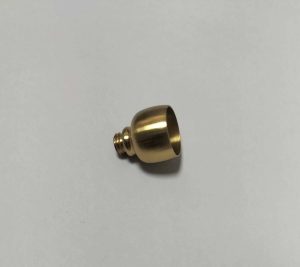
2. Stainless Steel: Where Corrosion Resistance is Critical
- 304 Stainless Steel: General purpose corrosion resistance
- Best for: Food processing equipment, clean room automation, exterior covers
- Why: Good corrosion resistance, hygienic surface easy to clean
- 316 Stainless Steel: Enhanced chemical resistance
- Best for: Chemical processing equipment, marine environments
- Why: Superior resistance to chlorides and harsh chemicals
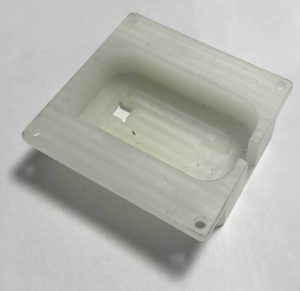
3. Engineering Plastics: The Silent Performers
- Delrin (POM): The ideal choice for low-friction applications
- Best for: Cable carriers, bearing pads, guide rails, gears
- Why: Low friction, excellent dimensional stability, high stiffness
- Nylon (PA6, PA66): For toughness and wear resistance
- Best for: Wear strips, bushings, conveyor components
- Why: Good impact resistance, self-lubricating variants available
- PEEK: Premium performance in extreme conditions
- Best for: High-temperature applications, chemically aggressive environments
- Why: Maintains properties at elevated temperatures, excellent chemical resistance
Precision Standards for Critical Automation Components
Precision requirements vary significantly based on the component’s function within the automation system.
1. Robotics & Motion Control Components
Robotic systems demand the highest level of precision:
- Robot End Effector Mounting: ±0.05mm positional tolerance for mounting features
- Precision Gearing: ISO 6-7 gear quality standards
- Linear Motion Guides: ±0.01mm for bearing seat flatness and parallelism
- Shafts & Journals: h6 fit tolerance for bearing interfaces
Case Study: A custom robotic tool changer requires precise alignment features machined to ±0.025mm to ensure perfect repeatability during tool changes. Any deviation results in failed connections and production stoppages.
2. Frame & Structural Components
While generally less demanding than motion components, structural elements still require careful consideration:
- Mounting Surfaces: ±0.1mm flatness for proper equipment alignment
- Hole Patterns: ±0.15mm true position for bolt circles
- Critical Interfaces: ±0.05mm where components mate with precision elements
3. Sensor & Vision System Mounting
Precision in sensor mounting directly impacts system accuracy:
- Camera Mounts: ±0.05mm for critical alignment features
- Sensor Brackets: ±0.1mm for mounting hole positions
- Optical Component Housings: ±0.025mm for lens seating surfaces
Special Considerations for High-Performance Automation
1. Thermal Management
In high-speed automation, thermal expansion can compromise precision:
- Material Matching: Select materials with similar thermal expansion coefficients for mating components
- Thermal Stability: Consider carbon fiber-reinforced composites or invar for metrology applications
- Design Compensation: Account for thermal growth in tolerance allocation
2. Vibration Damping
Dynamic systems require careful vibration management:
- Damping Materials: Cast iron provides superior vibration damping over steel
- Structural Design: Avoid resonant frequencies through proper ribbing and geometry
- Component Isolation: Use engineered plastics or composites to break vibration paths
3. Wear Resistance & Maintenance
Minimizing downtime requires attention to wear characteristics:
- Hard Coatings: Specify hard anodizing for aluminum or nitride coatings for steel
- Wear Surfaces: Incorporate hardened tool steel inserts in high-wear locations
- Lubrication Channels: Design integrated lubrication paths in critical components
Achieving the Right Balance: Cost vs. Performance
While high precision and exotic materials offer performance benefits, they come at a cost. Smart design involves specifying the minimum required precision and optimal material grade for each application:
- Reserve tight tolerances (±0.025mm or better) only for critical interfaces
- Use commercial grades (6061 aluminum, 304 stainless) where possible
- Consider secondary operations (hard coating, grinding) rather than machining everything from premium materials
- Implement modular designs that isolate high-precision elements from structural components
Partnering with an Automation-Savvy Machine Shop
Successful automation equipment manufacturing requires more than just machining capability—it demands understanding of how components function in dynamic systems. The right manufacturing partner should:
- Provide design for manufacturability feedback specific to automation applications
- Understand the relationship between material properties and real-world performance
- Maintain consistent quality across production runs
- Offer appropriate quality documentation for critical components
At our facility, we specialize in high-precision automation components that meet the rigorous demands of modern manufacturing. From custom linear guide rails to robotic end-of-arm tooling, we help automation engineers transform designs into reliable, high-performance components.
Ready to optimize your automation components for reliability and performance? Contact us today for a design review and discover how our expertise in automation-focused manufacturing can benefit your next project.