
Introduction
A CNC machined part fresh off the machine has a raw, functional beauty. But for many applications, the journey doesn’t end there. The right surface finish is the final, critical step that transforms a raw machined component into a high-performance, durable, and aesthetically pleasing product. It can protect against corrosion, enhance wear resistance, improve appearance, or even add special properties like electrical conductivity. At Lenchor, we coordinate a comprehensive range of surface treatments through our trusted partners, ensuring your parts not only function perfectly but also meet the highest standards for longevity and presentation. This guide will demystify the most common surface finishes, helping you select the perfect one for your project.
1. Anodizing: The Durable Workhorse for Aluminum
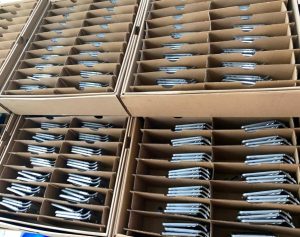
Anodizing is an electrochemical process that thickens and strengthens aluminum’s natural oxide layer. It’s arguably the most popular finish for aluminum parts due to its excellent durability and cosmetic options.
- How It Works: The aluminum part is immersed in an acid electrolyte bath and an electrical current is applied. This causes a controlled oxide layer to grow from the base metal, creating a deeply integrated, porous surface that can be dyed in various colors and then sealed.
- Key Benefits:
- Enhanced Corrosion Resistance: Creates a highly protective, non-conductive barrier.
- Increased Surface Hardness: Makes the surface much more resistant to scratches and wear.
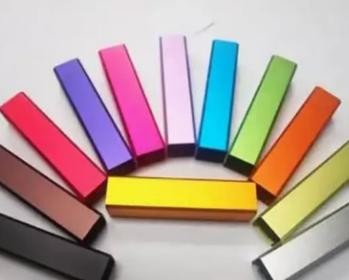
- Aesthetic Versatility: Available in a wide spectrum of colors (clear, black, red, blue, etc.).
- Improved Paint and Adhesive Adhesion: The porous layer provides an excellent base for further coating.
- Ideal For: Consumer electronics enclosures, automotive trim, aerospace components, and any aluminum part requiring durable color coding or environmental protection.
- Our Coordination: We manage the entire anodizing process for you, specifying thickness (e.g., Type II, Type III hardcoat) and color to match your requirements.
2. Electropolishing: For a Mirror Finish and Cleanliness
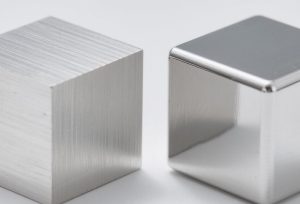
Often called the “electrolytic deburring,” electropolishing is a reverse plating process that removes a thin layer of surface material from stainless steel and other metals.
- How It Works: The part is immersed in a chemical bath and subjected to an electrical current. This selectively removes microscopic high points, leveling the surface and dissolving embedded contaminants.
- Key Benefits:
- Smooth, Mirror-Like Finish: Reduces surface roughness and creates a bright, aesthetically pleasing look.
- Deburring: Removes microscopic burrs left from machining.
- Superior Cleanliness & Corrosion Resistance: Removes impurities and passivates the surface, making it ideal for sanitary applications. It meets FDA and other hygienic standards.
- Microscopic Dimension Reduction: Can hold tight tolerances by uniformly removing a small amount of material (typically 0.0002″ – 0.0003″).
- Ideal For: Medical and surgical instruments, food and pharmaceutical processing equipment, high-purity fluid systems, and decorative architectural metalwork.
3. Electroplating: Adding Function and Luster
Electroplating involves depositing a thin layer of another metal onto the substrate part. This can be done for decorative purposes, corrosion resistance, or to enhance surface properties.
- How It Works: The part (cathode) is submerged in a solution containing ions of the plating metal (anode). A direct current causes the metal ions to bond to the part’s surface.
- Common Types & Their Uses:
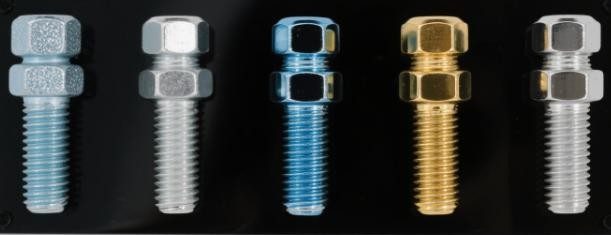
- Nickel Plating: Provides a hard, wear-resistant, and corrosion-resistant surface. Often used as an undercoat for chrome plating. We ensure all our plated finishes are RoHS compliant.
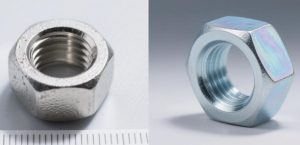
- Zinc Plating: A cost-effective sacrificial coating for steel parts that provides good corrosion resistance. The familiar “galvanized” look.
- Chrome Plating: Offers extreme hardness, wear resistance, and a bright, reflective appearance. Used for automotive trim and industrial rollers.
- Ideal For: Providing specific functional properties like increased hardness, solderability, or creating a decorative, high-gloss finish.
4. Passivation: Enhancing Stainless Steel’s Innate Resistance
Passivation is a chemical treatment used on stainless steel to maximize its inherent corrosion resistance.
- How It Works: The part is immersed in a citric or nitric acid bath, which removes free iron particles from the surface that were embedded during machining. This allows the chromium in the stainless steel to form a uniform, passive oxide layer.
- Key Benefits:
- Maximized Corrosion Resistance: Prevents rust and pitting by restoring the stainless steel’s protective layer.
- No Dimensional Change: It is a non-electrolytic process that does not remove a measurable amount of material.
- Ideal For: All stainless steel parts that will be used in corrosive environments, especially in medical, marine, and aerospace industries.
5. Bare Machined Finishes: When the Look is the Function
Sometimes, the “as-machined” finish is all that’s required. We can control this look through our machining processes.
- Standard Mill Finish: The typical finish straight from the CNC machine.
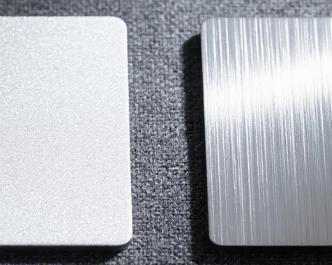
- Bead Blasting: Propelling fine glass beads at the surface to create a uniform, satin-like, matte texture. It hides tool marks and provides a clean, non-reflective appearance.
- Brushing: Using abrasive brushes to create a uniform directional satin finish.
Choosing the Right Finish: A Quick-Reference Table
| Finish | Best For | Key Property | Typical Cost |
|---|---|---|---|
| Anodizing | Aluminum parts | Durability & Color | $$ |
| Electropolishing | Stainless Steel | Cleanliness & Corrosion | $$ |
| Electroplating | Multiple Metals | Added Functionality (e.g., hardness) | $$ – $$$ |
| Passivation | Stainless Steel | Corrosion Resistance | $ |
| Bead Blasting | All Metals | Uniform Matte Appearance | $ |
Conclusion: The Final Touch to Your Precision Part
Selecting a surface finish is a balance of aesthetics, functionality, and budget. It’s the final touch that ensures your precision-machined part performs flawlessly in its intended environment and looks the part.
Let Us Handle the Finishing Touches
Don’t navigate the complexities of surface treatment alone. As your one-stop partner, Lenchor manages the entire process. Specify your desired finish on your next quote request, and we will coordinate with our certified partners to deliver a part that is complete, certified, and ready for use. Experience the simplicity of a full-service source factory.