
In the fast-paced world of product development, the ability to quickly transform an idea into a physical part can make or break your timeline. When it comes to rapid prototyping and small-batch production, two technologies dominate the conversation: 3D printing and CNC machining. While both can produce high-quality parts, they operate on fundamentally different principles—one builds layer by layer, while the other carves away material from a solid block .
Choosing the wrong process can lead to unnecessary costs, delayed timelines, or parts that fail during testing. So how do you decide? The answer lies in a structured approach—a decision tree that weighs your priorities around material, quantity, strength, precision, and budget.
Let’s build your decision tree.
Understanding the Core Difference
Before diving into the flowchart, it’s essential to grasp the fundamental distinction between these two methods.
CNC machining is a subtractive process. It starts with a solid block of material (metal or plastic) and uses rotating cutting tools to remove material until the desired shape remains . This method is renowned for producing parts with high precision (tolerances as tight as ±0.01mm), excellent surface finish, and mechanical properties identical to the raw material .
3D printing, or additive manufacturing, builds parts layer by layer from the ground up . It excels at producing complex geometries, internal cavities, and organic shapes that would be impossible or prohibitively expensive to machine . However, printed parts often have anisotropic properties—meaning they are weaker in one direction than another—and typically require post-processing to achieve smooth surfaces .
With this foundation, let’s walk through the decision process.
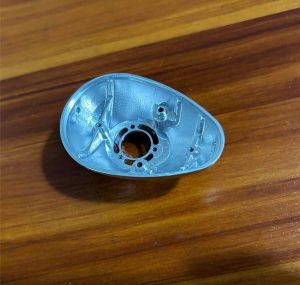
The Decision Tree: 6 Key Questions to Ask
Question 1: What Material Does Your Part Require?
The starting point of any prototyping decision is material. If your part must be made from a specific engineering material—say, 316 stainless steel for corrosion resistance, aluminum 6061 for strength-to-weight ratio, or POM (Delrin) for low friction—your options narrow immediately.
If you need a specific metal or engineering plastic: CNC machining is almost always your answer. While metal 3D printing (DMLS/SLM) exists, it remains significantly more expensive and offers lower productivity for most applications . CNC machining works with the full spectrum of materials—from aluminum, copper, and stainless steel (304/316/316L) to plastics like POM, bakelite, and polyurethane—while maintaining their original mechanical properties .
If you’re flexible on material and exploring options: 3D printing in resins or standard polymers (like ABS or nylon) may suffice for early-stage concept models .
At Lenchor, our CNC machining services cover all the materials mentioned above, ensuring your functional prototypes are made from the exact material specified for final production. Contact us at elain@lenchor.com to discuss your material requirements.
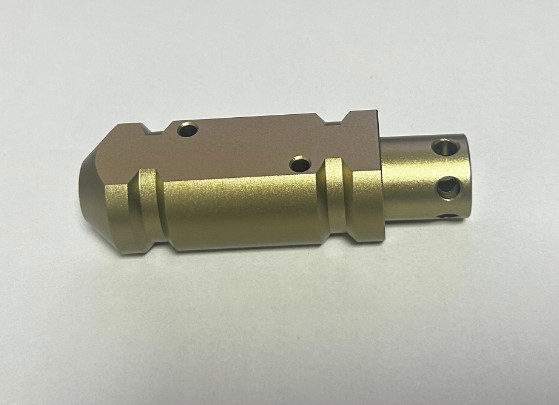
Question 2: What Is Your Required Quantity?
Production volume dramatically influences cost-per-part economics.
For 1–10 units (especially complex parts): 3D printing often wins on cost and speed due to minimal setup requirements . There’s no need for fixturing, toolpath programming, or machine setup—just hit “print.”
For 10–50+ units: CNC machining becomes increasingly cost-effective. While setup costs (programming, fixturing) are amortized across the batch, the per-unit cost drops significantly . For runs of 50+ parts, CNC machining is typically the clear economic winner while delivering superior precision .
For small-batch production (tens to hundreds): CNC machining is the workhorse. It delivers repeatable accuracy across every part in the run, essential for functional testing, pilot production, or bridging the gap to mass manufacturing .
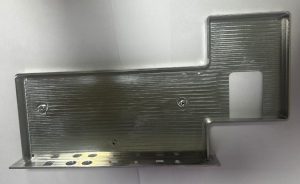
Question 3: Does Your Part Need to Bear Load or Undergo Functional Testing?
This is perhaps the most critical question. If your prototype will be subjected to mechanical stress, thermal cycling, or real-world operating conditions, strength is non-negotiable.
CNC-machined parts retain the material’s full structural integrity. They are isotropic—equally strong in all directions—making them ideal for load-bearing components, engine brackets, precision gears, and parts that must survive harsh environments .
In contrast, 3D-printed parts are inherently anisotropic. Their layer-by-layer construction creates weak points along the Z-axis, and tensile strength can be 40–60% lower than machined parts made from the same material .
Choose CNC machining for:
- Structural components
- Parts requiring mechanical or thermal testing
- Assemblies with moving parts or tight fits
- Any application where failure is not an option
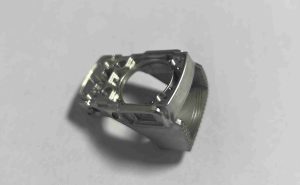
Question 4: How Critical Are Precision and Tolerances?
CNC machining is the undisputed champion of precision. Standard tolerances of ±0.025mm to ±0.015mm are achievable, with even tighter control possible for critical features . This level of accuracy is essential for parts that must interface with existing assemblies, seal against surfaces, or maintain consistent performance across multiple units.
3D printing tolerances vary by technology but typically range from ±0.2mm to ±0.5mm for FDM, and around ±0.3mm for SLS . While adequate for form-fit prototypes or visual models, these tolerances often fall short for functional components.
If your drawing specifies tight tolerances, or if you need features like precision holes, threaded inserts, or mating surfaces, CNC machining is the only practical choice .
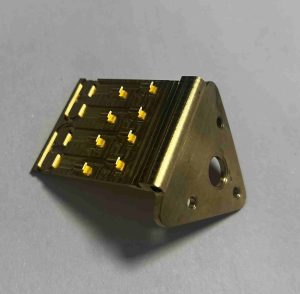
Question 5: How Complex Is Your Geometry?
Here, 3D printing shines. If your design includes:
- Internal channels or lattice structures
- Organic, freeform shapes
- Deep cavities that cutting tools cannot reach
- Assemblies that would otherwise require multiple parts
3D printing may be your best option. It enables geometries that are impossible to machine, without the need for specialized tooling or multi-axis setups.
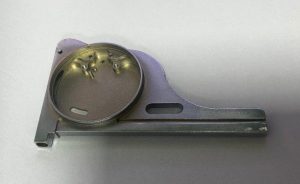
However, modern CNC machining—especially with 4-axis and 4.5-axis capabilities—can handle remarkably complex parts. At Lenchor, our multi-axis machining centers allow us to machine complex contours, off-angle holes, and intricate features in a single setup, often eliminating the need for multiple operations . If you’re unsure whether your design is machinable, our engineering team can provide Design for Manufacturability (DFM) feedback to optimize your part for CNC production.
Question 6: What Is Your Budget and Timeline?
Finally, consider your constraints.
For speed and low initial investment: 3D printing can produce a part in 24–48 hours with minimal setup . It’s ideal for rapid iterations and design exploration.
For long-term value and production readiness: CNC machining may take 3–5 days for initial setup, but once programmed, it delivers consistent parts with superior quality . If your prototype will eventually lead to production, starting with CNC machining ensures material and process continuity .
The Decision Tree Summary
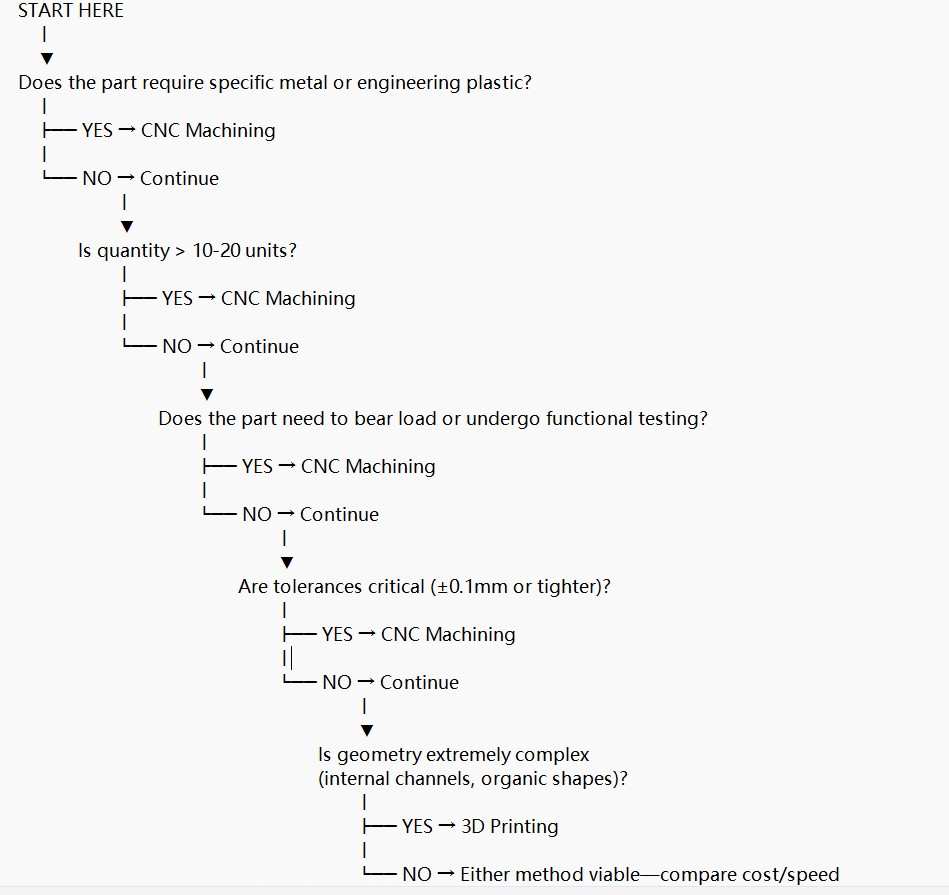
Here’s a simplified flowchart to guide your choice:
The Hybrid Approach: Getting the Best of Both Worlds
In many real-world development programs, the optimal path isn’t an either/or choice—it’s a hybrid strategy that leverages the strengths of both technologies .
A typical hybrid workflow might look like this:
- Early concept validation: Use 3D printing to quickly iterate on form, fit, and aesthetics. Print multiple design variations overnight to gather feedback .
- Functional testing: Once the design matures, produce functional prototypes via CNC machining using the exact production materials (aluminum, stainless steel, POM, etc.). Test these parts under real-world conditions to validate strength, durability, and performance .
- Small-batch production: Scale to small batches (tens to hundreds) using CNC machining, leveraging the same programs and fixtures developed during prototyping .
This approach minimizes risk. You avoid the cost of machining designs that may still change, and you ensure that final validation occurs on parts that truly represent production intent .
Why Lenchor for Your CNC Machining Needs?
At Lenchor, we’ve built our capabilities around the needs of engineers and product developers who demand precision, reliability, and seamless execution. Our facility is equipped to handle the full spectrum of CNC machining:
- Machining Centers: 850 VMC and high-speed drill/tap centers for efficient production
- Turning: CNC lathes, mill-turn machines, and Swiss-type lathes for complex rotational parts
- Advanced Capabilities: 3-axis to 4.5-axis machining, wire EDM, and polishing
- Full Process Coverage: Milling, turning, drilling, tapping—all under one roof
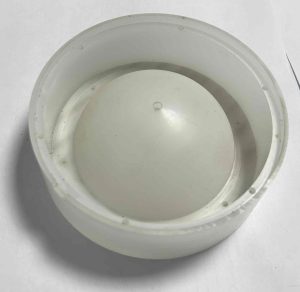
- Material Expertise: Aluminum, copper, stainless steel (304/316/316L), POM, bakelite, polyurethane, and more
- Surface Finishing (Partner Network): Anodizing, polishing, ROHS-compliant plating,polished, passivation—delivered as a seamless part of your order
Whether you need a single functional prototype in 316 stainless steel or a small batch of precision-machined aluminum components, we deliver the quality and consistency your projects demand.
Ready to start your next project? Contact elain@lenchor.com or visit lenchor.com to discuss your requirements.
Conclusion: Let Requirements Drive Your Choice
The choice between 3D printing and CNC machining for functional prototypes and small-batch production doesn’t have to be complicated. By walking through a structured decision tree—considering material, quantity, strength, precision, geometry, and budget—you can confidently select the process that aligns with your project goals.
Remember: 3D printing excels at complex geometries and rapid iterations, while CNC machining delivers precision, strength, and production-ready parts in true engineering materials . When in doubt, a hybrid approach often provides the safest and most efficient path from concept to market.
And when your path leads to CNC machining, Lenchor is here to partner with you—delivering precision parts, expert DFM support, and a seamless experience from quote to delivery.