
Introduction: The “Curse” That Keeps Countless Engineers Awake at Night
“The prototype tested perfectly—why do problems keep emerging once we move to mass production?”
“The client was very satisfied with the first batch of samples, but formal orders always get stuck due to quality fluctuations.”
“The design was verified in small batches—why does everything fall apart when we scale up?”
If you’ve ever been troubled by these questions, rest assured—you are not alone. The successful leap from prototype to mass production is often referred to by industry experts as “the valley of death in manufacturing.” A prototype validates the feasibility of a design, but mass production tests the systematic capability of manufacturing. Today, we will delve into the key strategies for smoothly crossing this chasm.
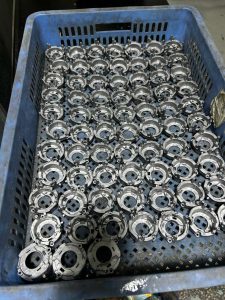
Chapter 1: Why Can “Perfect Samples” Mislead Us?
1.1 The “Greenhouse Effect” of Prototypes
Samples are typically produced under ideal conditions:
- Operated by senior technicians using optimal equipment
- Repeated debugging without time constraints
- Manual adjustments and refinements to compensate for design shortcomings
- Stable parameters in a controlled environment
1.2 The Real-World Challenges of Mass Production
When production scales up:
- Operator Variability: Different shifts, varying levels of operator proficiency
- Equipment Fluctuations: Equipment wear, batch differences, changes in ambient temperature and humidity
- Material Consistency: Minor performance variations in raw materials from different batches
- Cycle Time Pressure: Reduced process tolerance under efficiency demands
Key Mindset Shift: A great prototype proves that “the product can be made,” while successful mass production must prove that “the product can be made consistently, reliably, and economically—over and over again.”
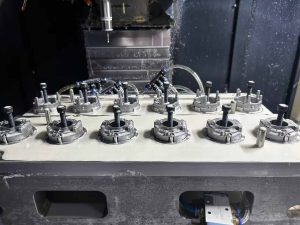
Chapter 2: The Three Pillars of a Smooth Transition
2.1 Pillar One: Process Solidification and Standardization
(Solving the problem of “doing it the same way every time”)
The Shift from “Art” to “Science”:
- Windowing Process Parameters
- Define acceptable parameter ranges for each critical process step (not just a single ideal value)
- Establish safety margins for parameter boundaries
- Example: Sheet metal welding current is not “150A,” but “145-155A, optimal 150A”
- Creating Reproducible Process Routes
- Develop detailed Process Flow Diagrams (PFD)
- Create Standard Operating Procedures (SOPs) – illustrated and error-proofed
- Video guides for critical operations
- Setting Up Process Monitoring Points
- Identify Key Process Characteristics (KPC)
- Design real-time monitoring and feedback mechanisms
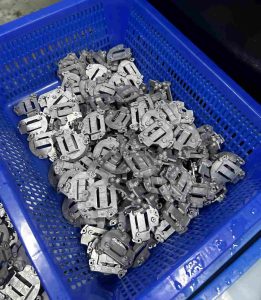
2.2 Pillar Two: Systematic Fixture and Tooling Design
(Solving the problem of “anyone can do it the same way”)
The Three Levels of Tooling:
- Basic Positioning Fixtures
- Ensure consistent part placement with every setup
- Eliminate human alignment errors
- Error-Proofing Process Tooling
- Mistake-proof design: parts cannot be assembled if oriented incorrectly
- Sensor integration: critical actions confirmed before allowing the next step
- Quick-Changeover Systems
- Designed for small-batch, high-mix production
- Modular tooling, reducing changeover time from hours to minutes
Lenchor Case Study: We assisted a medical device client by implementing a welding fixture integrating pneumatic positioning, visual inspection, and pressure feedback, reducing product defect rates from 12% to 0.3%.
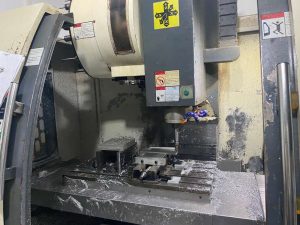
2.3 Pillar Three: Strategic Layout of Quality Control Points
(Solving the problem of “catching issues early”)
The “Three Lines of Defense” in Quality Control:
- First Line: Incoming Quality Control
- Rapid inspection plans for critical dimensions of incoming materials
- Traceable material batch management system
- Second Line: In-Process Quality Gates
- Quality checks before value is added (not after completion)
- Setting non-negotiable quality stop points
- Third Line: Final Pre-Shipment Verification
- Balancing sampling plans with 100% inspection
- Automating functional testing where possible
Chapter 3: The Bridge Value of Small-Batch Production
3.1 Why Go Through a “Small-Batch Production” Phase?
Skipping small-batch and jumping straight into mass production is like mass-producing an airplane without a test flight. The core value of small-batch production lies in:
- Process Validation: Testing process stability under actual production rhythms
- Risk Exposure: Revealing systemic risks with limited losses
- Team Familiarization: Production teams learning product characteristics and quality requirements
- Supply Chain Validation: Verifying suppliers’ ability to deliver on time, to spec, and in required volumes
3.2 Typical Scales and Strategies for Small Batches
- Validation Batch: 50-200 units, focusing on process feasibility
- Ramp-Up Batch: 200-1,000 units, testing production cycle time and consistency
- Pre-Production Batch: 1,000-5,000 units, simulating mass production conditions
Chapter 4: Lenchor’s Smooth Transition Framework
4.1 Our “Three-Phase Transition Method“
Phase 1: Joint Process Design (Post-Design Freeze)
- Manufacturing engineers involved early in design reviews
- Design for Manufacturing (DFM) and Design for Assembly (DFA) analysis
- Identification and communication of Critical-to-Quality (CTQ) characteristics
Phase 2: Process Development & Validation (Pre-First Article)
- Developing processes on production equipment (not prototype machines)
- Designing and prototyping fixtures and tooling
- Drafting the initial Quality Control Plan
Phase 3: Controlled Ramp-Up Production (Pre-Full Order)
- Starting with small batches and gradually increasing volume
- Conducting comprehensive reviews after each batch
- Continuous optimization until stable output is achieved
4.2 The “Four Key Metrics” for Consistency Assurance
For every mass production project, we monitor:
- First Pass Yield (FPY): Target >98%
- Process Capability Index (Cpk): Critical dimensions >1.67
- Overall Equipment Effectiveness (OEE): Continuously improved to >85%
- Cost of Quality Ratio: Continuously reduced to <3%
Chapter 5: Customer Case Study – Solving Real Problems
Case Background
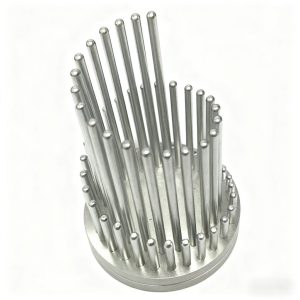
A smart hardware company’s heat sink enclosure had perfect prototypes but encountered issues in mass production:
- Flatness fluctuations (affecting chip contact)
- Inconsistent weld discoloration (affecting appearance)
- Assembly hole position deviations (affecting automated assembly)
Solution Implementation
- Process Analysis: Discovered manual grinding was compensating for flatness requirements
- Tooling Upgrade: Designed a vacuum adsorption platform to ensure flat machining
- Parameter Solidification: Switched welding to energy control instead of time control
- Front-Loaded Inspection: Added on-machine probing to the machining center
Results
- Flatness pass rate increased from 72% to 99.5%
- Weld appearance inconsistency completely eliminated
- Automated assembly success rate increased from 85% to 99.8%
- Overall production efficiency improved by 30%
Chapter 6: Your Action Checklist
Post-Prototype Success, Pre-Mass Production Must-Checks:
- Design Level: Has complete DFM analysis been performed?
- Process Level: Does each process step have defined parameter windows and SOPs?
- Tooling Level: Have error-proofing fixtures been designed for critical processes?
- Quality Level: Does the Quality Control Plan cover the entire process flow?
- Personnel Level: Have operators received standardized training?
- Material Level: Have suppliers passed mass production capability audits?
- Equipment Level: Has production equipment passed capability verification?
When Selecting a Manufacturing Partner, Evaluate:
- Do they have a systematic prototype-to-production transition process?
- Can they provide a small-batch transition production plan?
- What are their fixture design capabilities and case studies?
- Is their process control and quality system robust?
- Are they willing to dedicate engineering resources to solve problems together?
Conclusion: A Smooth Transition is Designed, Not Left to Chance
A successful leap from prototype to mass production is not a miracle—it is the result of systematic design. It requires shifting our mindset from admiring “one perfect sample” to building “a stable production system.”
At Lenchor, we don’t see ourselves merely as “order-taking” suppliers. We are our clients’ co-builders of manufacturing systems. We are deeply involved in the entire journey—from design optimization and process solidification to fixture design and quality system establishment—ensuring that every design idea transforms into millions of stable and reliable products in the market.
If you are preparing for the leap from prototype to production, or struggling with issues during this transition, please contact our engineering team. Let’s design your smooth transition path together, enabling excellent designs to reach the market reliably.